Three months after the conclusion of the inaugural 2025–2026 Giga Accelerator Programme, graduates continue to secure partnerships and earn international recognition, offering a timely opportunity to take stock of the programme’s early impact.
This wrap-up highlights key results and learnings, focusing on what it takes to move school connectivity solutions from early-stage development to deployment and scale.
Selected through a competitive process that received over 350 applications from around the world, the final cohort comprised two startups from Kenya, one from South Africa, one from Nigeria, one non-profit organization from the United Kingdom operating in Uganda, and three startups from Spain.
Giga’s first business development programme, delivered jointly with Plug and Play, the Accelerator offered virtual masterclasses and one-on-one mentoring to refine business models and improve market readiness.
Each selected startup received USD 50,000 in grant funding to move from planning to testing their solutions in real operating environments, accelerating the development of open-source solutions that support Giga’s goal of connecting the world’s schools to the internet, especially in underserved communities.
Run out of the Giga Technology Centre in Barcelona, the programme also promoted exchange with the local tech ecosystem and gathered the cohort for two in-person events. In December 2025’s Community Days, they attended Tech Spirit Barcelona, joining in working sessions and stakeholder meetings. In March 2026, the programme culminated in Demo Days, with a pitching session at 4YFN, part of Mobile World Congress, followed by a showcase at Ca l’Alier during Giga Days, an open house for Giga stakeholders.
Through their participation in the Accelerator and access both to the Giga stakeholder network and the local tech community, most of the participants — nearly 70 per cent — achieved partnerships that have given their solutions market validation.
This momentum has already translated into international recognition. One graduate, Chargebyte, was recently named winner of a MWCapital Award in the SME and Startups category. The award honors innovative projects that use technology to address global social and environmental challenges, and in its second edition received 298 applications from 62 countries, selecting just 17 finalists across five categories.
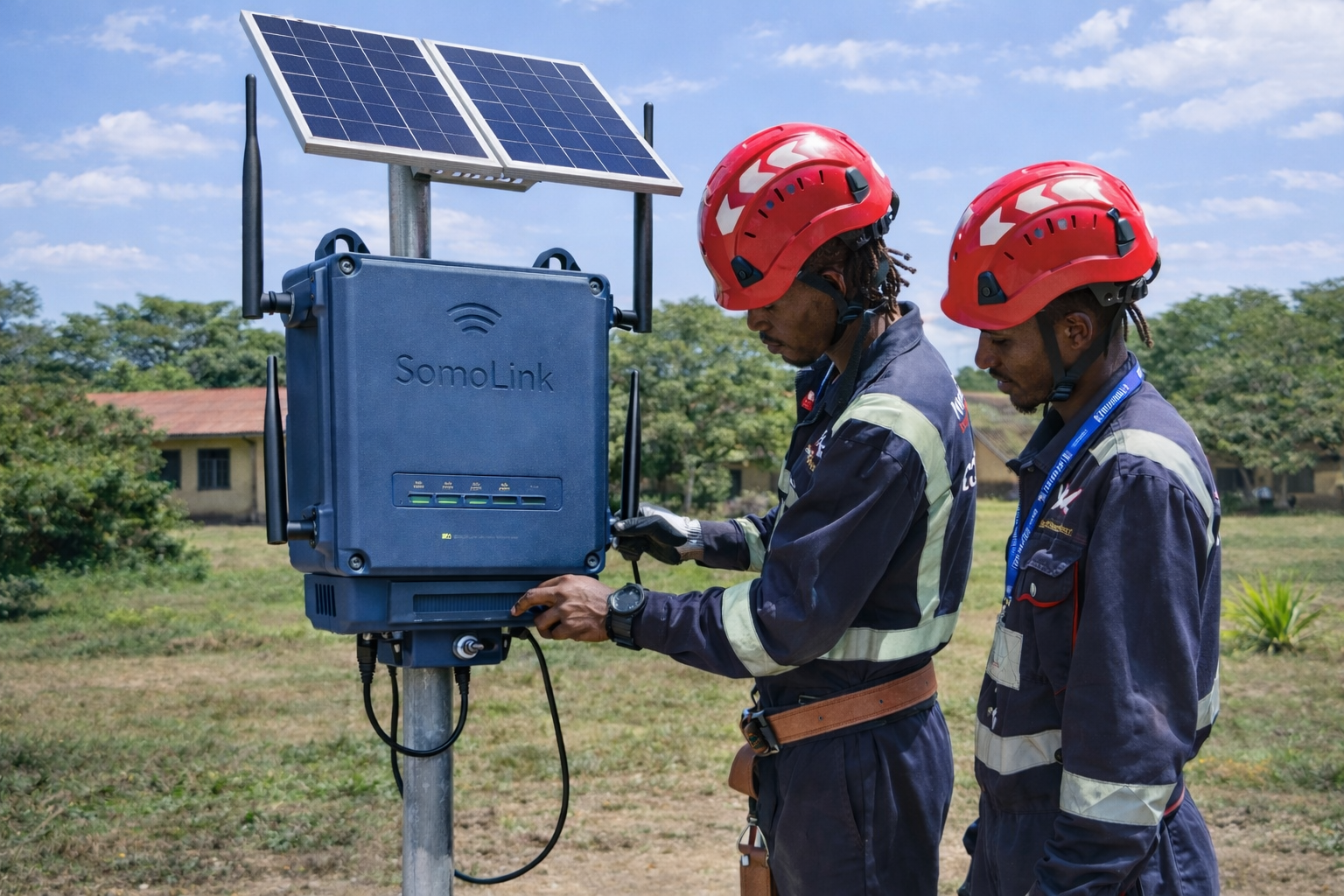
Alongside this recognition, participants are delivering tangible results on the ground. For example, one Kenyan startup, using solar-powered connectivity technology, brought 24 schools online by partnering with local regulatory and county authorities as well as school administrators.
Another startup operating in refugee and internally displaced settlements connected five schools, also using a solar-powered solution, reaching more than 20,000 learners, by partnering with education authorities, development organizations and local implementation networks.
By the end of the programme, the cohort had connected 36 schools, with additional deployments already in progress, reached multiple countries across Africa and advanced significantly in technical maturity, commercial readiness and deployment capability.
Together, these outcomes show a cohort moving into practical execution, with solutions being deployed and used in real-world settings
Reflecting on the programme, its lead, Giga ITU’s Anastasia Nedayvoda, highlighted several key learnings:
- In connectivity, the challenge is rarely a lack of technology; the harder problem is helping founders naviate procurement, partnerships and deployment pathways that allow innovations to reach schools and communities at scale.
- The startups that progressed fastest were those that invested time in validating customer needs and adapting their solutions to the operational constraints of their country of deployment.
- Founders benefit most when technical support, market access and ecosystem connections are provided together; any one of these elements alone is rarely sufficient to accelerate adoption.
In sum, participants highlight the Accelerator’s transformative impact. Wekkitech, for example, described the experience as taking the company “from a scrappy local ISP to a structured, infrastructure-grade network operator,” while Kreios Space said it provided “the push we needed to properly lay the first stone in our satcom journey.”
Cohort Overview
ISP in a box
- Chargebyte (Kenya): Operates solar-hybrid charging and Wi-Fi stations to provide reliable digital services in off-grid areas. Already deployed 32 stations in Kenya and Rwanda.
- Hello World (United Kingdom): Deploys community-managed, solar-powered connectivity hubs to bridge the digital gap in remote schools. So far, 115 hubs have been installed in Uganda.
- Peddle iLabs (Nigeria): Provides portable, solar-powered digital classrooms (TRL 7–8) using MeshNet technology for crisis-affected zones. Already deployed and covering 20,000+ students in Nigeria.
- Wekkitech (Kenya): Develops solar-powered connectivity hardware nodes and an AI-powered telecom ERP platform, currently in the scaling phase with active pilots across 24 schools in Kenya.
AI enabled solutions
- MOAI Analytics (Spain): Delivers an AI-powered geospatial platform for automated infrastructure monitoring and investment risk scoring, already deployed for infrastructure risk assessment.
- Taurine Technology (South Africa): Develops an AI-driven network management platform that simplifies enterprise-grade networking for emerging markets, with early commercial deployments underway in South Africa, and Malawi.
Emerging technologies
- Kreios Space (Spain): Enables high-speed connectivity (TRL 6) through breakthrough propulsion systems for Very Low Earth Orbit (VLEO) satellites. The technology has been validated in lab settings and is now preparing for its first in-orbit demonstration.
- Thinger.io (Spain): Supports resilient school connectivity through an open-source end-to-end IoT cloud ecosystem. Production-ready platform serves over 200,000 developers and 200 paying customers.