By Adeleh Mojtahed, Giga Programme Officer, International Telecommunication Union
This International Youth Day, I am thinking about a simple truth that I have seen again and again this year: the talent is already there. From classrooms and workshops to innovation challenges, I have seen young people demonstrating the creativity, curiosity and determination needed to shape the future.
Across several African countries, I met young people, teachers and innovators who are ready to shape the future- curious, determined and full of ideas. While their lives may be shaped by different national and local realities, their aspirations are remarkably similar: they want opportunities to learn, create, participate meaningfully and build a better future for themselves and their communities.
What they need are the skills, tools, connectivity and opportunities to turn that potential into impact.
We often speak about connectivity, digital transformation, artificial intelligence, robotics and innovation. But this year’s travels reminded me of something much simpler: technology alone does not transform lives. People do.
This is where Giga’s mission becomes so important. Across the world, millions of children still attend schools without internet access, limiting their ability to benefit from the digital tools and learning opportunities that are increasingly shaping education. By supporting governments to connect schools to the Internet, Giga is helping create the conditions for young people to develop the digital skills they will need to participate fully in the future economy and society.
Yet far too many young people still lack access to the skills, tools and opportunities needed to realize potential. As UN Secretary-General António Guterres observed, “young people are already leading the way as organizers and innovators. But to go further, they need access to the skills that will shape the future”
I saw this firsthand through the AI and Robotics Youth Training programme, implemented by ITU with Google and Will.i.am’s i. am Angel Foundation. Building on Giga’s work to help governments connect schools, the programme is being piloted in Côte d’Ivoire, Ghana, Kenya, Nigeria and South Africa. It is training 1,000 teachers, standing up more than 100 AI School Clubs, and reaching up to 20,000 students.
Earlier this year I visited several of our pilot countries and watched participants take their first steps into AI and Robotics. I saw curiosity turn into confidence, experimentation and problem-solving.
Throughout these visits, I was reminded that our role is not to create talent, but to ensure young people have the opportunities and support they need to develop it.
Expanding the possible
At the Training of Trainers workshop in Kenya, nearly 200 teachers took part, some travelling long distances to be there. What they learned was never meant to stay in the room. Each teacher returns to their school and community with new knowledge, confidence and experience, creating opportunities for many more students.
This is how impact multiplies — from one training to many schools; from one teacher to many learners, and from one region to another.
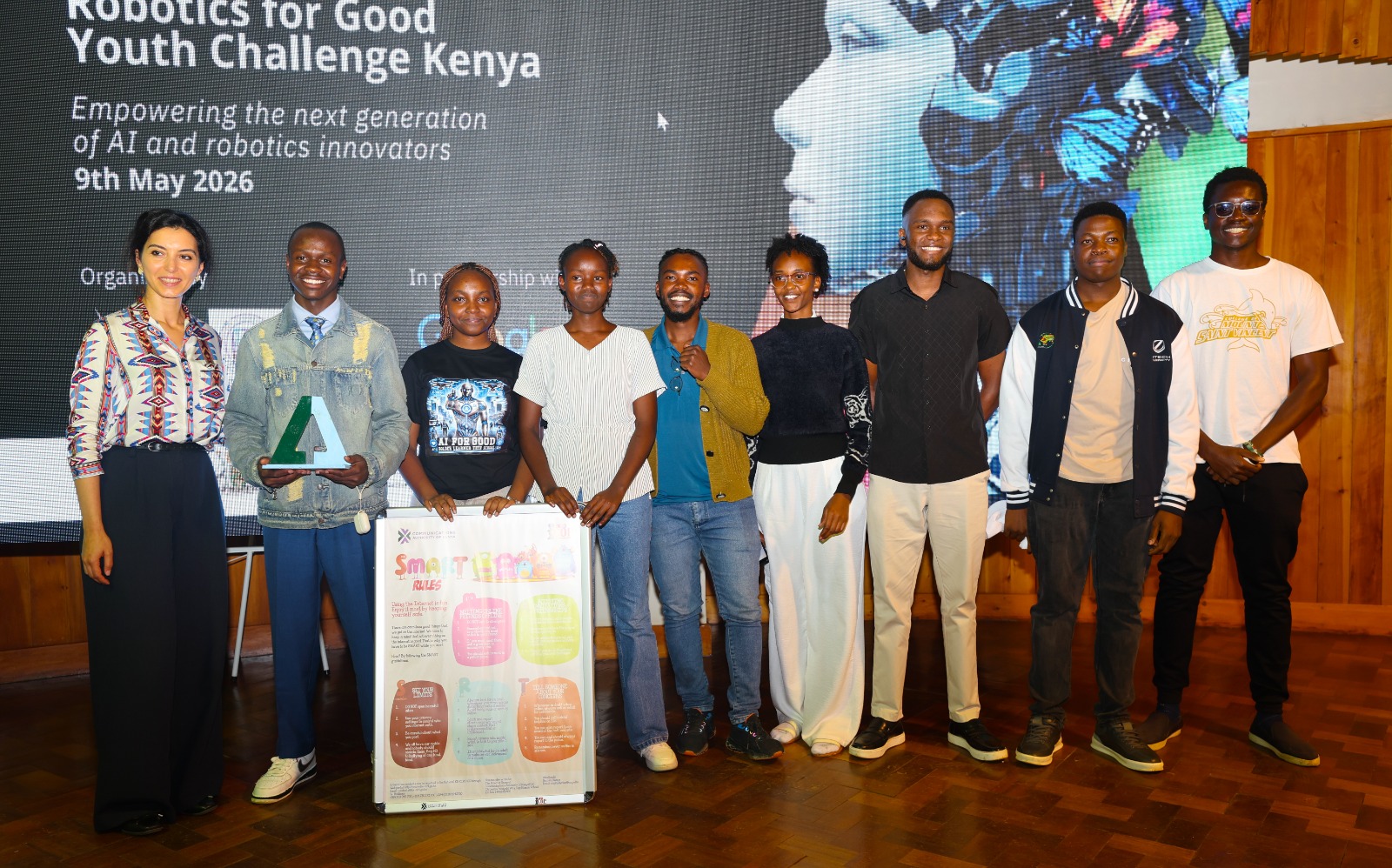
I also attended national innovation challenges linked to this year’s Robotics for Good Youth Challenge, where student teams presented solutions to real community problems. Their ideas were thoughtful, practical and innovative, demonstrating the power of local ingenuity and determination.
The students participating in Kenya’s national competition designed and built robots to address food security, the focus of the 2025-2026 Robotics for Good Youth Challenge. In doing so, they contributed to broader sustainability goals, including reducing carbon emissions and supporting climate action, while demonstrating creativity, determination and innovative thinking. One student captured the programme’s impact beautifully:
“AI and robotics, beyond the name, empowers young students to see a future that goes beyond our own vision.”
For me, this says so much about why these opportunities matter. It is not only about learning to use technology; it is about expanding what young people believe is possible for themselves and their communities.
When young people are given the tools, confidence and opportunity to address challenges they understand firsthand, technology becomes a means to imagine new solutions, build them and inspire others to do the same. That is exactly the kind of mindset we need to nurture.
As H.E William Kabogo Gitau, Cabinet Secretary for Information, Communications and the Digital Economy of Kenya put it in his address at the Robotics for Good Youth Challenge Grand Finale at the recent AI for Good Global Summit in Geneva:
“What you build for this competition matters beyond the prize. A young child throughout Africa will see your work and decide that she can build too and keep building.”
Everywhere I travelled, I encountered the same determination to learn, create and solve problems. Giga helps turn that potential into opportunity by supporting governments to connect schools to the Internet, because a classroom cannot become an AI-ready learning environment until it is online.
Lasting impact
A training can spark curiosity. A competition can unlock ambition. But young people also need spaces where they can continue exploring, experimenting, collaborating and building. AI School Clubs help provide that continuity.
AI is rapidly changing how we learn, work, and solve problems. Preparing young people for this future cannot mean simply teaching them how to use the latest technology. It requires governments, teachers, communities, technology partners, international organizations and young people themselves working together.
During my time in Ghana, I was reminded of a famous phrase by Dr. Kwame Nkrumah that has stayed with me:
“Forward ever, backward never.”
For me, it captures the spirit of what we are trying to achieve. The talent is already there. Our responsibility is to ensure that young people are not left behind as AI reshapes our societies, and to keep opening doors for that talent to grow.
On International Youth Day, this is the commitment we should carry forward: connect schools, open doors and give young people the space to build the future they already have the talent to imagine.
About the author:
Adeleh Mojtahed is an international engagement and Project Management professional with a passion for advancing inclusive and impactful solutions to expand opportunities for underserved communities and contribute to sustainable development.
Holding a Master of Science in Project Management with a specialization in sustainable transformations within multinational environments, she is dedicated to advancing Giga’s work by strengthening collaboration across countries and within the UN ecosystem. Adeleh works out of the Giga Connectivity Centre in Geneva.
For more information on the above programmes and activities, contact [email protected]