
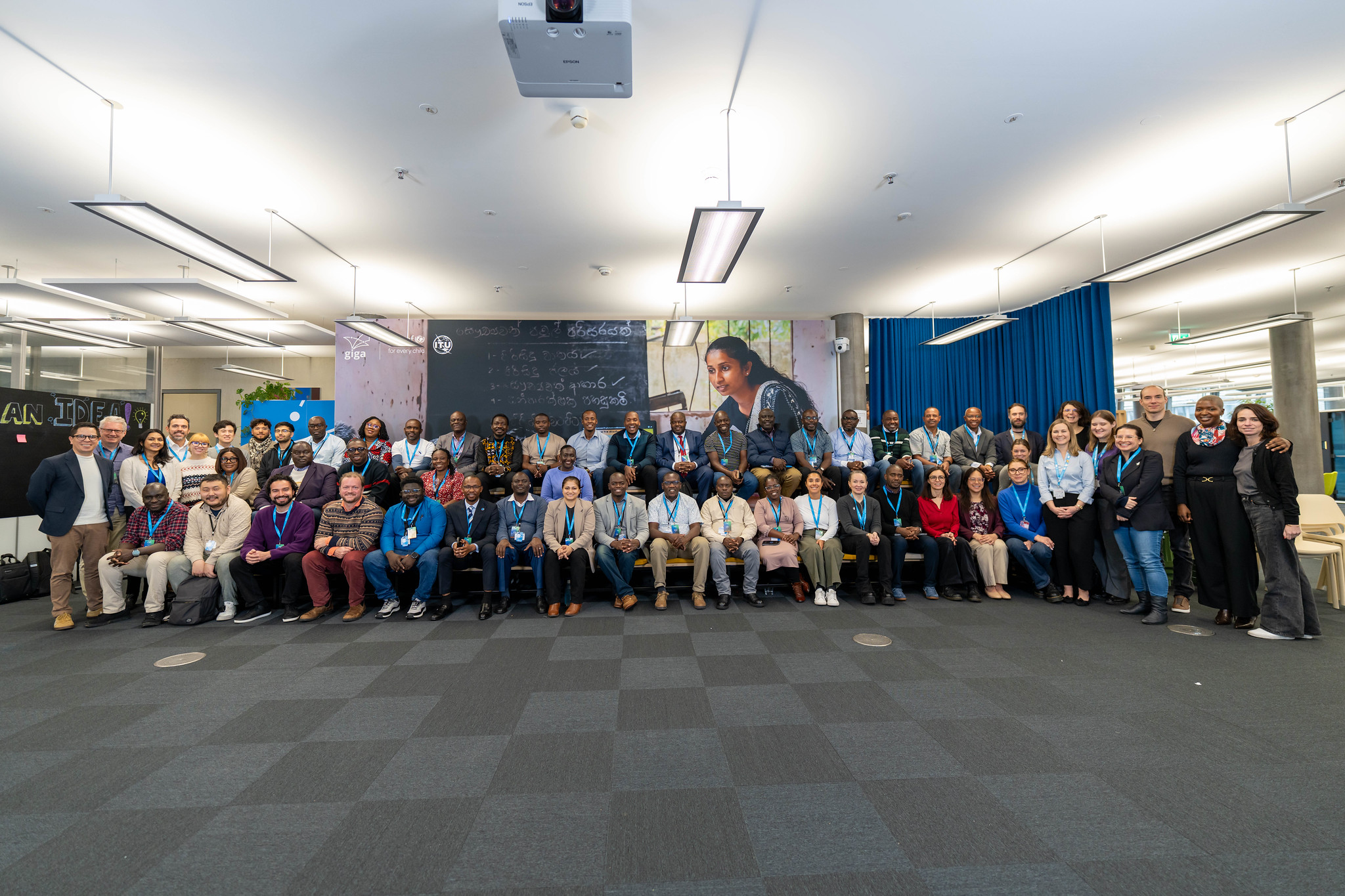
From 27–30 January 2026, the Giga Government Exchange Programme (GEP) convened at the Giga Connectivity Centre, bringing together government delegations from Ghana, Kenya, Malawi, Uganda and Zambia. Based in Geneva, where global policy, financing and technical expertise intersect, the Centre provided a working space for participating countries to focus on one shared challenge: how to sustainably expand internet connectivity across schools in their countries.
Participating delegations included representatives from Ministries of Education, ICT and Finance, alongside national regulatory authorities, Universal Service Funds, and research and education networks. Academic and technical partners also joined the exchange, contributing evidence, peer learning and system-level insight.
Opening the exchange on 27 January, Irene Kaggwa, ITU Giga Programme Manager, highlighted the human purpose behind the work:
“Here is a simple question: what kind of better life are we enabling for children? How do we increase the information that’s available to them? How do we give them a choice? How do we open up the opportunities they have? That is the whole drive behind Giga. Who is financing connectivity, and through which mechanisms? What innovative financing approaches can be unlocked? Over the next three days, we will work together to answer these questions.”
Speaking to the participants, Tanya Accone, Senior Advisor, Giga, UNICEF, underscored the programme’s practical focus:
“We really appreciate the space and the pressures, the strategic decisions that you are making in your national contexts. And that context, that environment, is exactly why the Government Exchange Programme is here. That’s why we’re focusing on those really practical foundations, financing, procurement, contracting and coordination, and how these things come together.”
Designed as a working exchange rather than a conference, the GEP emphasized execution over presentation. Through peer dialogue and hands-on collaboration, participants explored how to scale school connectivity by strengthening institutional processes and advancing smarter public procurement and financing approaches.
Appreciating the GEP’s practical, solutions-focused approach Francis Karanja, Head of National ICT Innovation and Integration Centre in Kenya, said, “ Bringing African countries together is incredibly important, as we are all at different stages of our digital journeys. While Kenya may be more advanced in areas such as digital infrastructure, there is still much to learn from other countries in different aspects. The structure of the programme was particularly strong. I came in concerned about sustainability, and through the clinics I gained valuable insight into financing and procurement models that can help build long-term, sustainable connectivity.”
The week combined plenary discussions, technical clinics (covering mapping, modelling, financing, procurement and contracting), peer breakouts by function, and dedicated country delegation work sessions. The focus throughout was on sequencing decisions, clarifying roles, and identifying practical next steps that governments can take within their own national systems.
By the end of the programme, each country delegation had co-developed a practical national connectivity roadmap, outlining priority actions, institutional responsibilities, sequencing, and areas where further technical or financial support may be required.
GEP 2026 built on earlier exchanges, shifting the emphasis from familiarization with tools to institutional delivery. The programme focused squarely on the government systems that make school connectivity sustainable over time, ensuring that investments in infrastructure translate into lasting access, affordability and impact for children and young people.