
Author: Leah Nguata
“Who am I supposed to follow, the teacher or the interpreter?”
My son asked me this question while watching a televised lesson during the COVID-19 pandemic.
The lesson included both a teacher and a sign language interpreter—an important step towards inclusion. Yet his question revealed a deeper challenge. Accessibility had been added to the lesson, not designed into it.
As an inclusive education specialist and the mother of a deaf child, I had long believed that technology could help transform learning. What I did not realize then was that connectivity and inclusion are not the same.
That lesson became painfully clear during the COVID-19 pandemic.
When school disappeared
When schools closed in 2020, millions of Kenyan learners were cut off from their classrooms. Like many countries, Kenya turned to radio, television and digital platforms. Globally, more than 1.5 billion learners were affected, with the greatest impact on those already marginalized.
For many deaf learners, including my son, learning did not move home. School simply disappeared.
My son was not alone. Before the pandemic, about 136,000 learners with special needs were enrolled in Kenyan primary schools, some 13,600 of them with hearing impairments at the primary level alone. Many of them depended on school not only for academic instruction, but for their primary exposure to Kenyan Sign Language. When schools closed, that lifeline closed with them.
Radio lessons became a lifeline for hearing learners. For my son, the signal reached our home and the device was on, but he was entirely excluded.
Kenya’s experience reflected a pattern documented by UNICEF’s Beyond Barriers report and the UNESCO Global Education Monitoring Report (GEM): when accessibility is not built into education systems, learners with disabilities are the first to be excluded in crises and the last to recover.
The pandemic did not create these inequities. It exposed them.
When inclusion is an add-on
When television lessons were later introduced through KICD Edu TV, I felt hopeful. Finally, there was a platform that could potentially reach deaf learners.
Sign language interpretation and other accessibility features were introduced to reach more learners, but they also uncovered a challenge that would shape how I think about digital learning.
The interpreter was present, but the learning was not designed for deaf learners. Attention shifted constantly between teacher, interpreter and content. The pacing assumed hearing students. The pedagogy remained unchanged.
As UNICEF’s Beyond Barriers report highlights, this is not unique to Kenya. In many countries, accessible digital learning content remains scarce, fragmented and difficult for many families to find and use.
Beyond access: The language gap
For deaf learners, the implications of inaccessibility go beyond missed lessons to language development itself.
Around 90 per cent of deaf children worldwide are born to hearing parents who do not initially know sign language. In many countries, including Kenya, school is often where sustained exposure to sign language begins. Language development, communication and academic learning are therefore tightly linked.
When that access is cut off, the impact extends beyond the academic to include the loss of language acquisition at a formative stage.
My son’s experience shows why this matters. His Kenyan Sign Language skills improved, but some pandemic learning loss remains, particularly in English and across the broader curriculum.
The challenge was not the absence of accessibility, but the absence of accessibility by design.
The impact is measurable. Kenya’s National Assessment System for Monitoring Learner Achievement (NASMLA) 2026 midline study shows persistent gaps among learners with hearing impairment: only 31.1 per cent reached the highest assessed level in English. These results do not reflect learners’ potential—they reflect fragmented access, where some resources are accessible but the broader curriculum is not.
This is why accessibility must be treated as a design principle. National sign languages are not optional layers; they are core to how many learners access education in the first place.
From access to participation
Even where systems expanded access, these layered challenges meant many learners still could not benefit. The issue is not a single gap, but how multiple barriers interact.
Kenya invested significantly in digital learning before and during the pandemic through initiatives such as Edu TV, the Kenya Education Cloud, and the Digital Literacy Program—a government-led effort to equip primary schools with devices and digital content.
This improved access yet families still faced barriers—unreliable connectivity, shared devices, limited digital skills and low awareness. Even when content existed, it did not always reach those who needed it most.
This reflects the global assessment found in the latest UNESCO GEM report: the digital transformation of education risks deepening existing inequalities when investment in infrastructure does not include support to ensure accessible content, affordability, digital literacy and community awareness.
But when learning is designed differently, the experience changes completely.
Inclusive design in practice
About six months after schools closed during Covid, we discovered accessible digital stories developed in Kenyan Sign Language through eKitabu Studio KSL and others. These range from television broadcasts to on-demand digital resources, self-paced and in my son’s own language.
I will never forget the first time he watched one.
He called everyone into the room.
“Come and see my teacher!”
The joy on his face is something I will carry with me for the rest of my life.
What he saw was more than a signer on a screen. He saw a story he could follow independently, without gaps. Most importantly, he saw that the content had been created with him in mind.
Experiences like this point to a clear set of priorities for policymakers.
Implications for policy
Countries are now investing in connectivity at scale, through broadband expansion, school internet initiatives and AI in education. These are important steps. But a connected classroom that excludes learners with disabilities is not progress. It is the same exclusion at higher speed.
Start with accessibility. It must be embedded from the outset—in curriculum, platforms and procurement—not added later.
Invest in content as much as connectivity. A connected school is not inclusive if learners cannot use what is delivered.
Design with learners. Learners with disabilities and their families should be part of the process. Co-design is not a courtesy—it improves outcomes.
Build inclusive AI now. AI is already being used to generate sign language avatars, produce captions and create accessible content at scale. AI can expand access, but only if inclusion is built into its foundations.
Measuring inclusion
My son’s story is not unique. That is exactly why it matters—and why it is a reason for optimism.
It shows both what is possible—and what is still at risk when systems fall short.
Some of the learning lost in those months after schools closed has not come back. He is still catching up in areas where language access was broken when it mattered most.
When I watch him now—learning independently, in his language—I see what inclusion looks like: learning designed with the child in mind from the start.
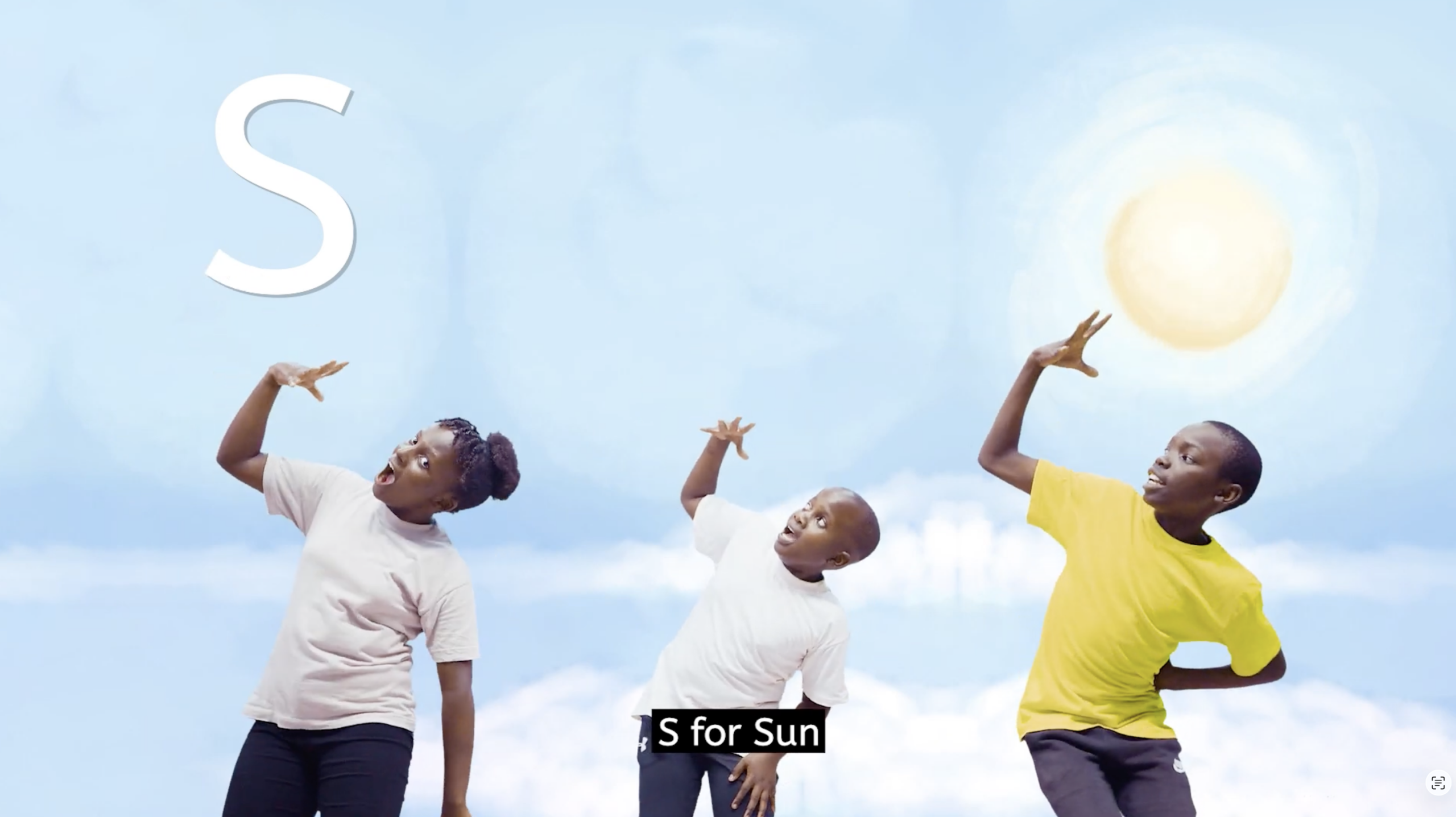
He has not yet caught up to where he needs to be, but the system around him is improving. Today, he helps develop accessible learning materials, including resources like Studio KSL’s ABC Sign Language dance. He is no longer just receiving education—he is helping shape it.
School connectivity should be measured not only by how many schools are online, but whether every learner can meaningfully participate once they are.
Because the goal is not access to technology. It is access to learning.
Leah Nguata is an inclusive education specialist in Kenya and mother of a deaf child. She founded the Inclusive Haven for Children, a platform focused on education policies, learning materials and implementation practices to support equitable learning for all children.