By Cleveland Thomas, ITU Area Representative for the Caribbean Region
On this World Telecommunications and Information Society (WTIS) Day 2026, we spotlight digital resilience and why it matters.
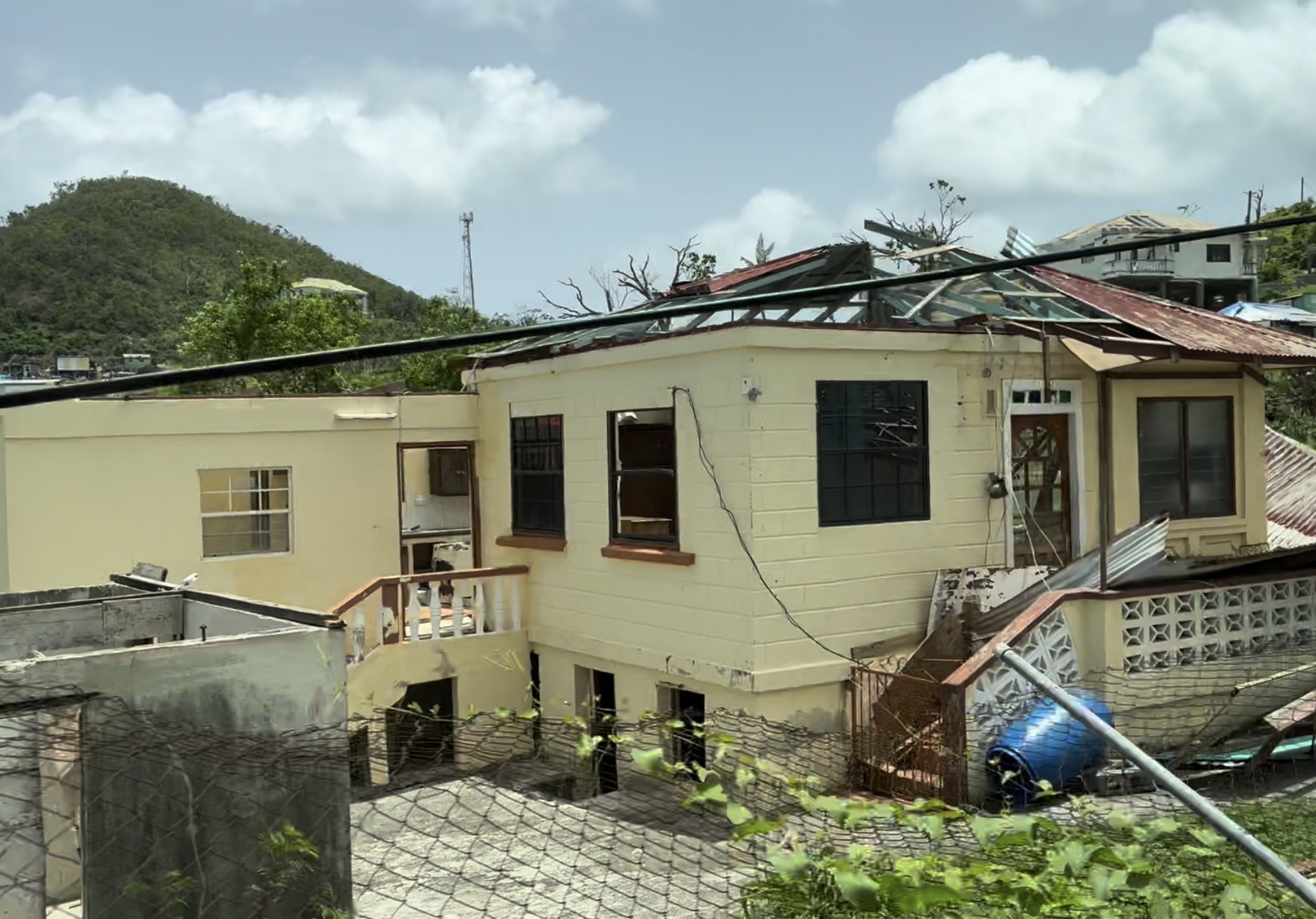
In the Caribbean, digital resilience is is an essential foundation for survival and recovery. We don’t just talk about the “digital divide”; we talk about a “digital lifeline.” When a hurricane comes through—God forbid that another devastating one comes anytime soon—that same infrastructure used for everyday communication like sending emails and scrolling social media becomes critical to saving lives and coordinating response efforts.
For years, disaster responses in the Caribbean were held back by a simple, frustrating problem: we couldn’t help what we couldn’t see. When I spoke at the first Giga Connectivity Forum in 2024, I highlighted the importance of the support of the Giga initiative in mapping schools and ICT infrastructure. What if we mapped every school in the Eastern Caribbean? What if we knew, in real-time, which ones had connectivity and which ones had gone dark from a disaster? And what if we used that map—not just for education, but as the backbone of a regional disaster response system?
In the Caribbean, a school is never just a place of learning. It’s the community shelter, a distribution point after a storm for essential supplies like food and water. In many rural communities, it’s the most resilient or only reinforced structure that remains standing when the winds die down. Building on the output of Giga’s support in mapping and monitoring connectivity status, these schools can function as a distributed resilience network—providing responders with immediate insight to assess intervention options. Imagine a storm passing and, within hours, emergency responders know exactly which villages can be reached and which cannot. No more days spent driving on impassable roads just to assess damage. No waiting for word to trickle in. Those red and green dots on a map become something more than data—they become a compass that guides governments and partners how to quickly intervene.
Many of us here have lived through enough hurricanes to know that when a community loses everything, one of the first things people seek is a way to reach their family and friends to say “I’m alive.” Connectivity enables individuals to reconnect with loved ones, supports health and safety systems in coordinating care, and restores access to critical information. In moments of crisis, it is a lifeline. It’s the father in Barbados who finally reaches his daughter in Toronto. It’s the clinic in Dominica that coordinates the delivery of medicine that was rerouted to another island. It’s a village, cut off from the world, suddenly back on the grid.
Yet, connectivity alone isn’t enough. In the Caribbean region, which has achieved over 90 per cent school connectivity, Giga’s focus has turned to meaningful connectivity—a priority for ITU.
This means connectivity is transformative not only when it is available, but it should be reliable, affordable, safe, and can be used by the people to improve their socio-economic well-being.
To this end, we need to look at areas such as the affordability of data plans, the quality and reliability of bandwidth, the availability of appropriate devices in our classrooms, and the digital skills required to use the Internet productively. Our children deserve more than symbolic connectivity—they deserve connectivity that works.
To advance this agenda, we are planning a regional workshop later this year. The workshop will bring together policymakers, regulators, educators, and community stakeholders. The objective is to translate Giga insights into actionable national and regional strategies. We come together not just to talk about cables and routers, but to talk about the whole e- education system, including digital skills for teachers, online safety for children, and smart forward-looking regulation that keeps the system inclusive and sustainable without eroding the tenets of education and child upbringing.
The work Giga began with mapping is the foundation for something larger: developing a regional resilience grid that serves every community, not just in calm weather but also when the storm comes.
This year’s WTISD theme “Strengthening Resilience in a Connected World,” speaks directly to this vision.
Resilience can’t be an afterthought. It has to be built into our infrastructure from the beginning, designed to protect the connections and empower the people who rely on them. Resilience also needs to be part of the considerations in planning and designing connectivity.
That’s the promise we make to the next generation. Because in the Caribbean, we know that when the wind starts to blow, what counts is what keeps working.
A line from Bob Marley captures this perfectly: “In the abundance of water, the fool is thirsty.” We have the technology. We have the will. We have communities that have demonstrated resilience for generations.
What remains is to match that strength with well-considered policy, effective regulation, productive collaborations, resilient technology, great leadership and the skills to tie it all together. That’s how this vision becomes real and how connectivity becomes a force that endures when it matters most.
About Giga
Giga is a joint initiative of ITU and UNICEF working with governments and other stakeholders to get every school connected to the internet and every young person to information, opportunity, and choice.